
LUMEREVA

Impact framework

Designing impact before measuring it.
LUMEREVA is developing a prospective framework connecting energy access with essential services, productive uses and local capacity. The framework is designed to guide the preparation, monitoring and learning of initiatives under consideration.

Explore the framework
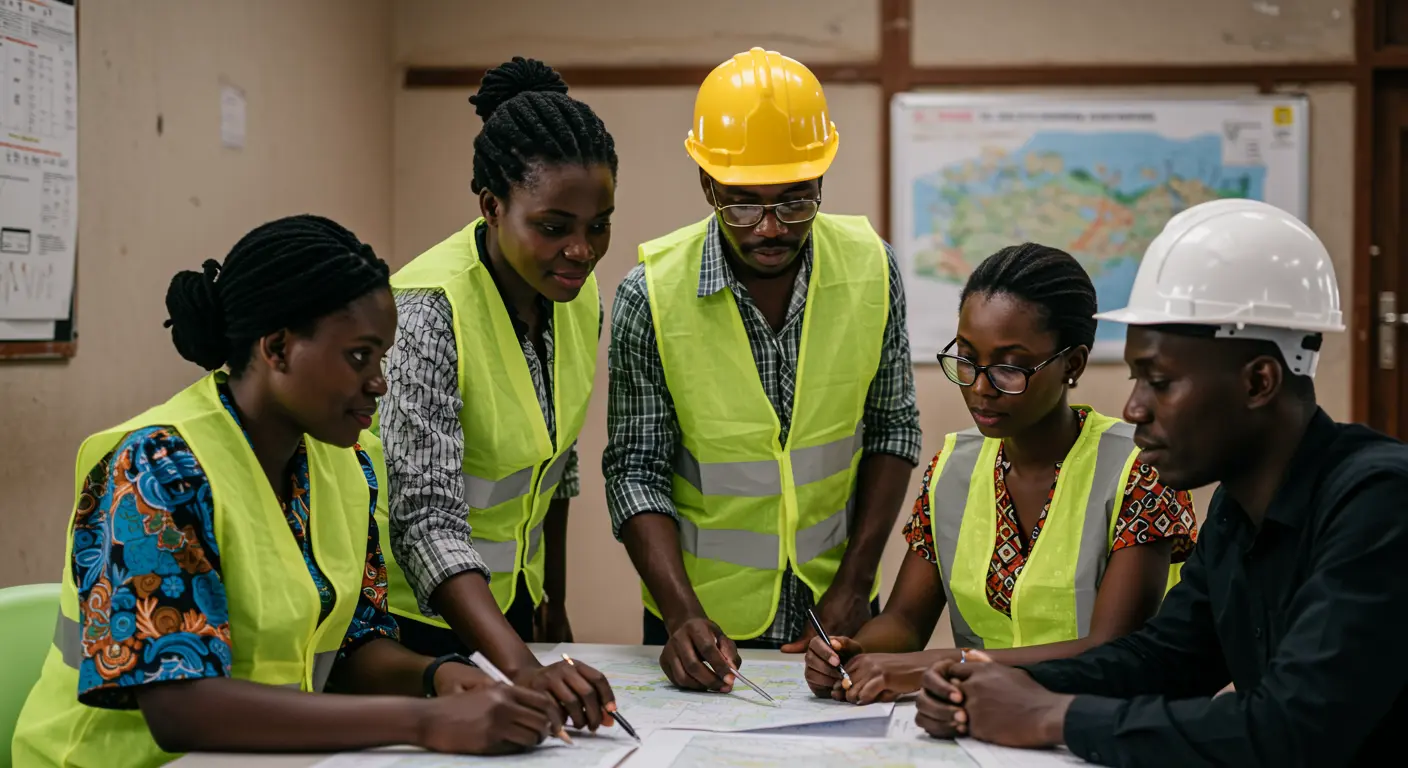
Conceptual illustration of the preparation of an energy initiative in Africa.
conceptual illustration — digitally produced

Impact framework

Structured perspectives focused on expected and measurable results

Connecting energy access with local capabilities.
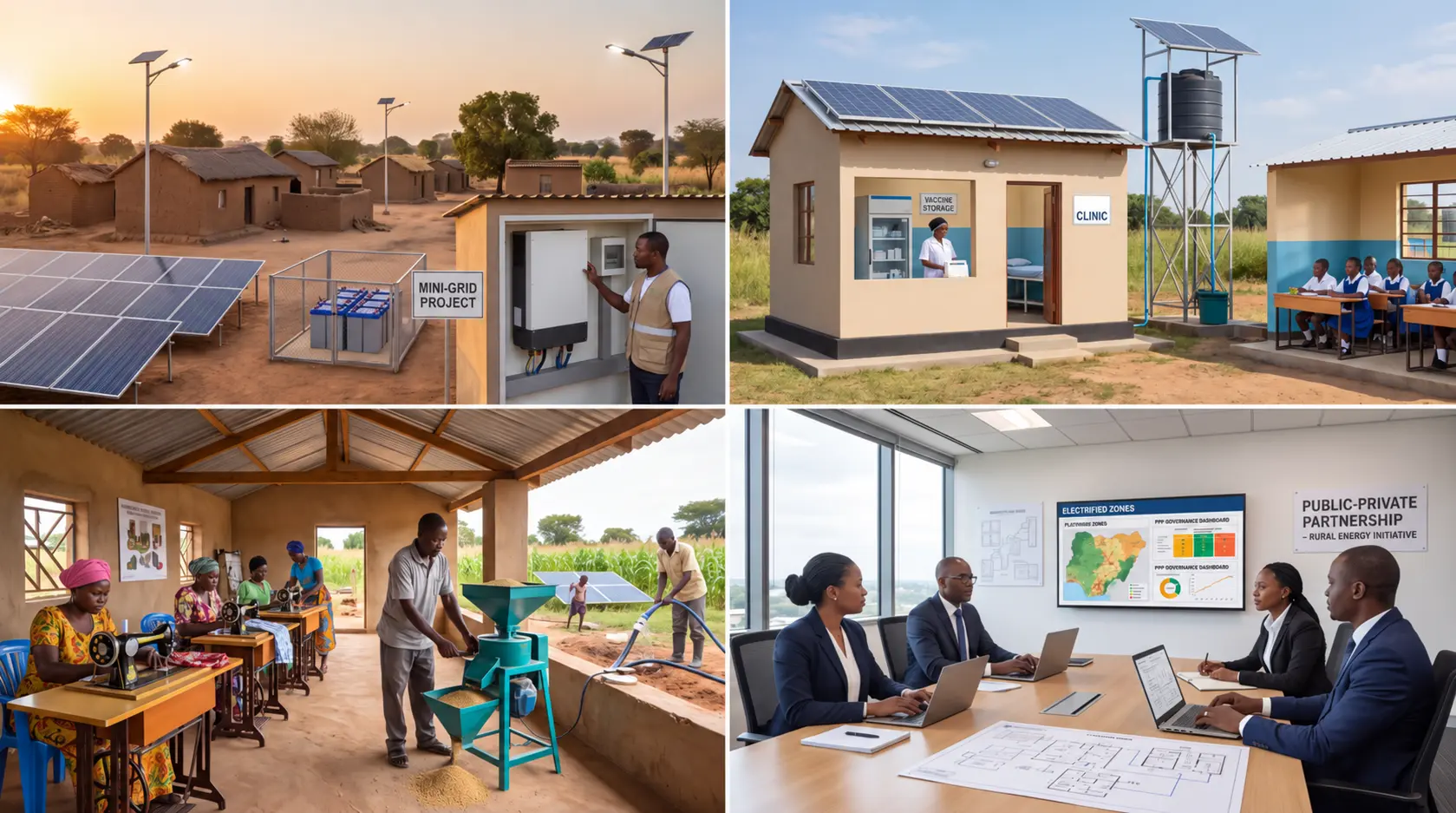
The proposed impact vision places renewable energy — particularly solar — at the service of rural electrification, essential services and productive uses.

View the reference note
Conceptual composition connecting a solar mini-grid, healthcare, education, productive activities and territorial governance.
conceptual illustration — digitally produced

International context

≈ 560M

people lacked access to electricity in Sub-Saharan Africa in 2024.

World Bank · Mission 300
300M

people targeted by Mission 300 for electricity access by 2030.

World Bank · Mission 300
2000–2024

period covered by the 2026 Tracking SDG7 electricity-access data.

Tracking SDG7 · ESMAP

From understanding needs to institutional learning.
A prospective chain clarifies how resources, design choices and partnerships could contribute to the intended transformations.

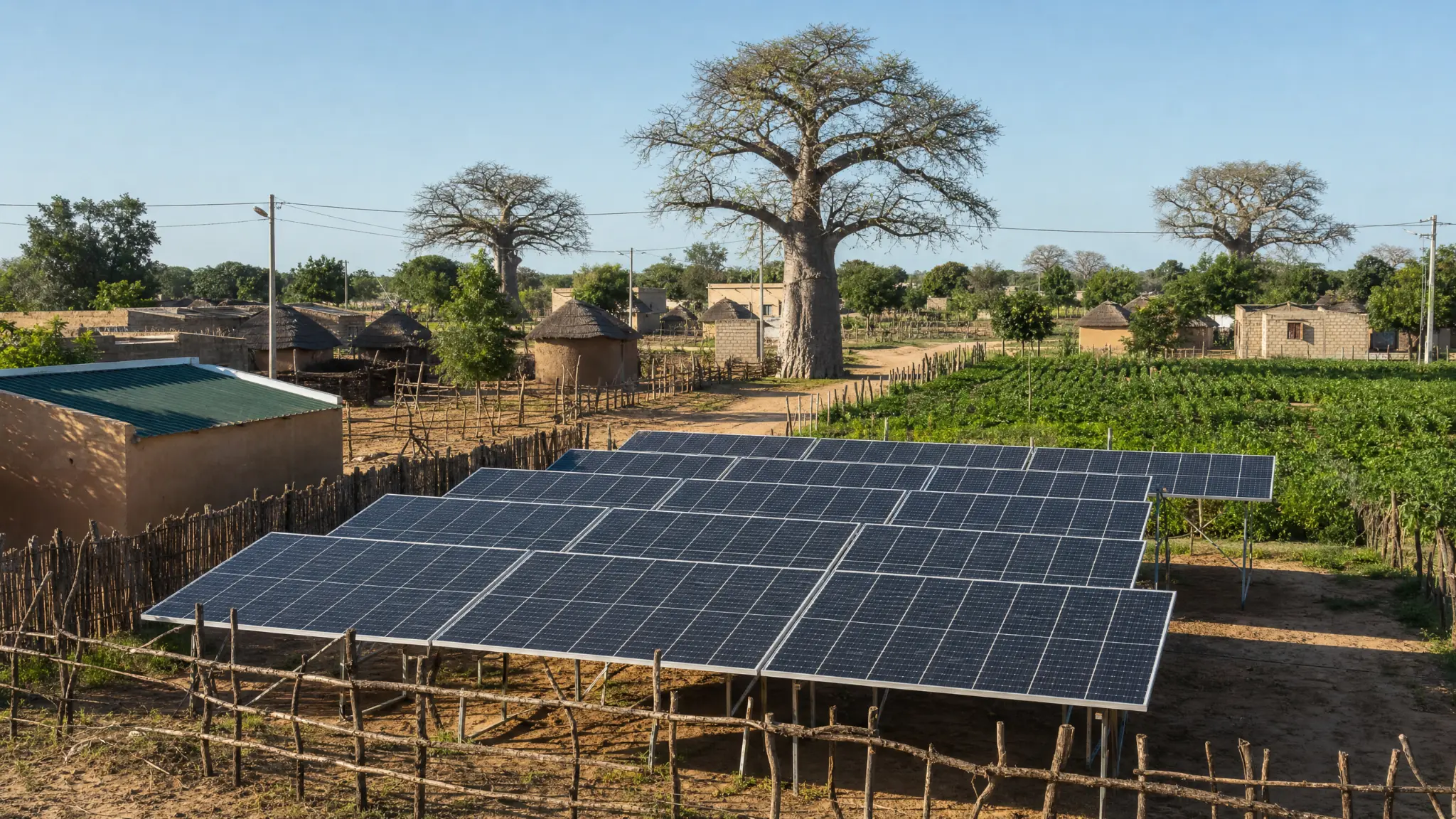
Solar mini-plant at the heart of a rural community, surrounded by homes, crops and baobab trees.
conceptual illustration — digitally produced
  1. 01

    Diagnosis

    Establish the baseline and priority uses.

  2. 02

    Design

    Define an architecture suited to the territory.

  3. 03

    Preparation

    Clarify responsibilities, controls and accountability.

  4. 04

    Intended outcomes

    Formulate the changes sought and their indicators.

  5. 05

    Learning

    Plan for documented lessons and adjustments.

View the reference note

Indicators designed to guide preparation and monitoring.

The indicators are illustrative. Baselines, targets and protocols will be specified for each initiative under consideration following diagnosis.

Technical team reviewing dashboards and energy mapping from a measurement and learning perspective.
conceptual illustration — digitally produced
Prospective indicators and proposed verification
DimensionProspective indicatorsProposed verification
AccessConnections · service hours · interruptionsRecords · meters · surveys
ServicesFunctional equipment · continuityService logs · checks
ProductivityProductive uses · time savedSurveys · activity data
InclusionData by gender, age and locationDisaggregated data · consultations
View the reference note

Priority domains

Three impact domains to be investigated jointly.

Reliability, continuity and affordability.
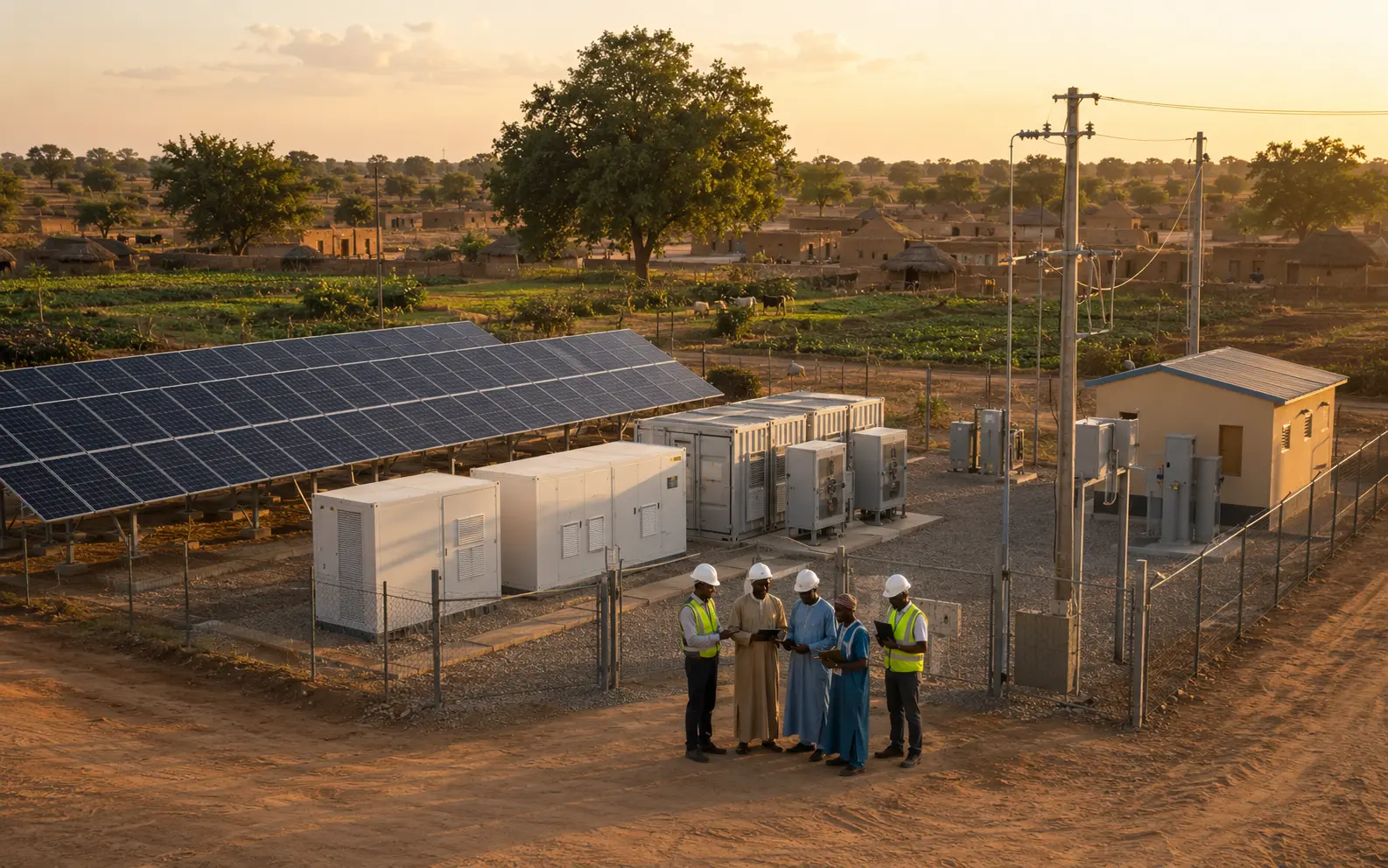
The initiatives under consideration prioritise renewable solutions responsive to rural realities, service quality and local resilience.

View the reference note
Technicians preparing electrical infrastructure near a solar installation in an illustrative rural setting.
conceptual illustration — digitally produced

Energy for learning, healthcare and water access.
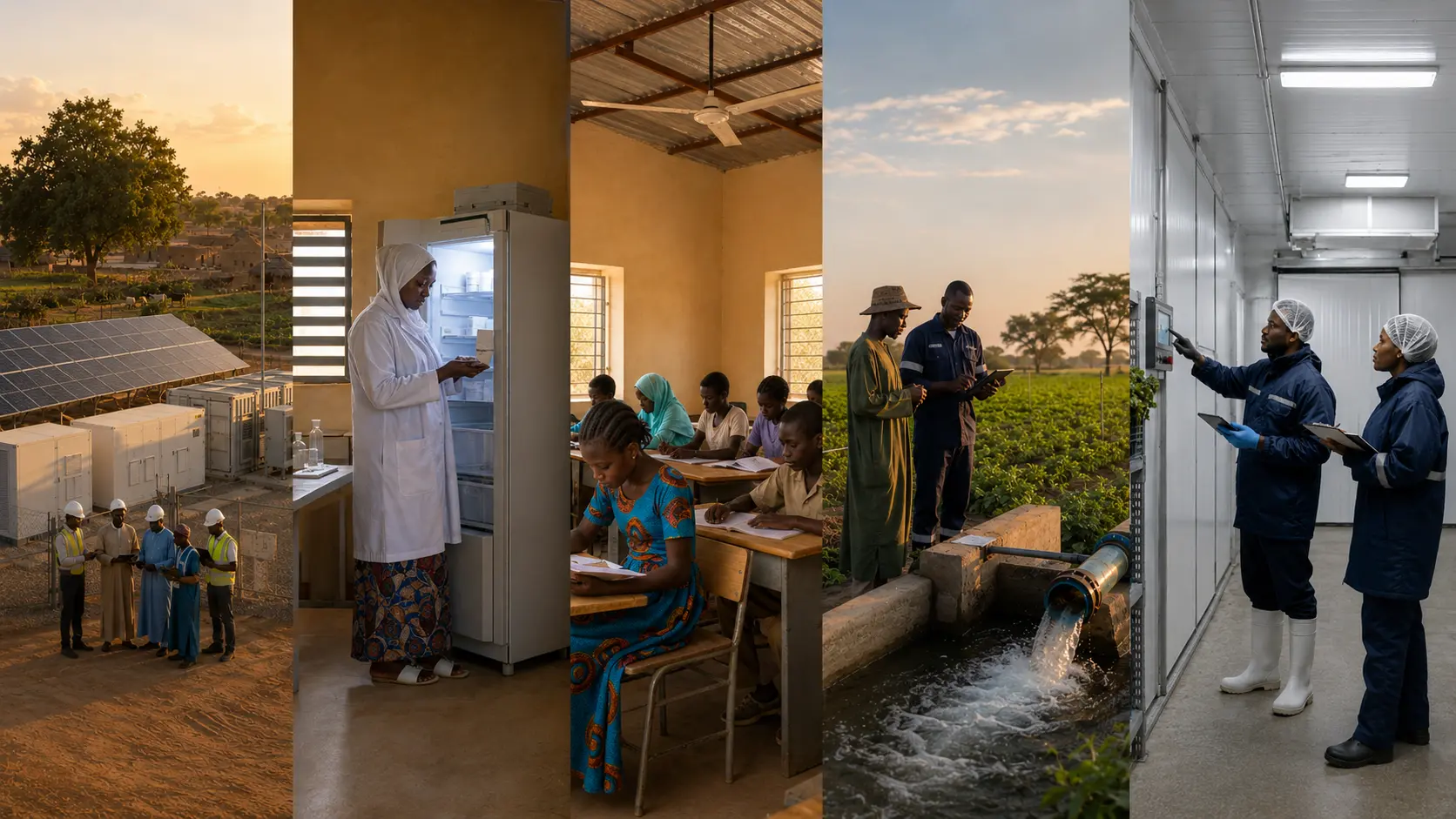
The framework connects energy with priority functions in education, health, water and the preservation of essential products.

Conceptual composition bringing together energy, healthcare, education, water and cold chain.
conceptual illustration — digitally produced
View the reference note

Energy for production, processing and enterprise.
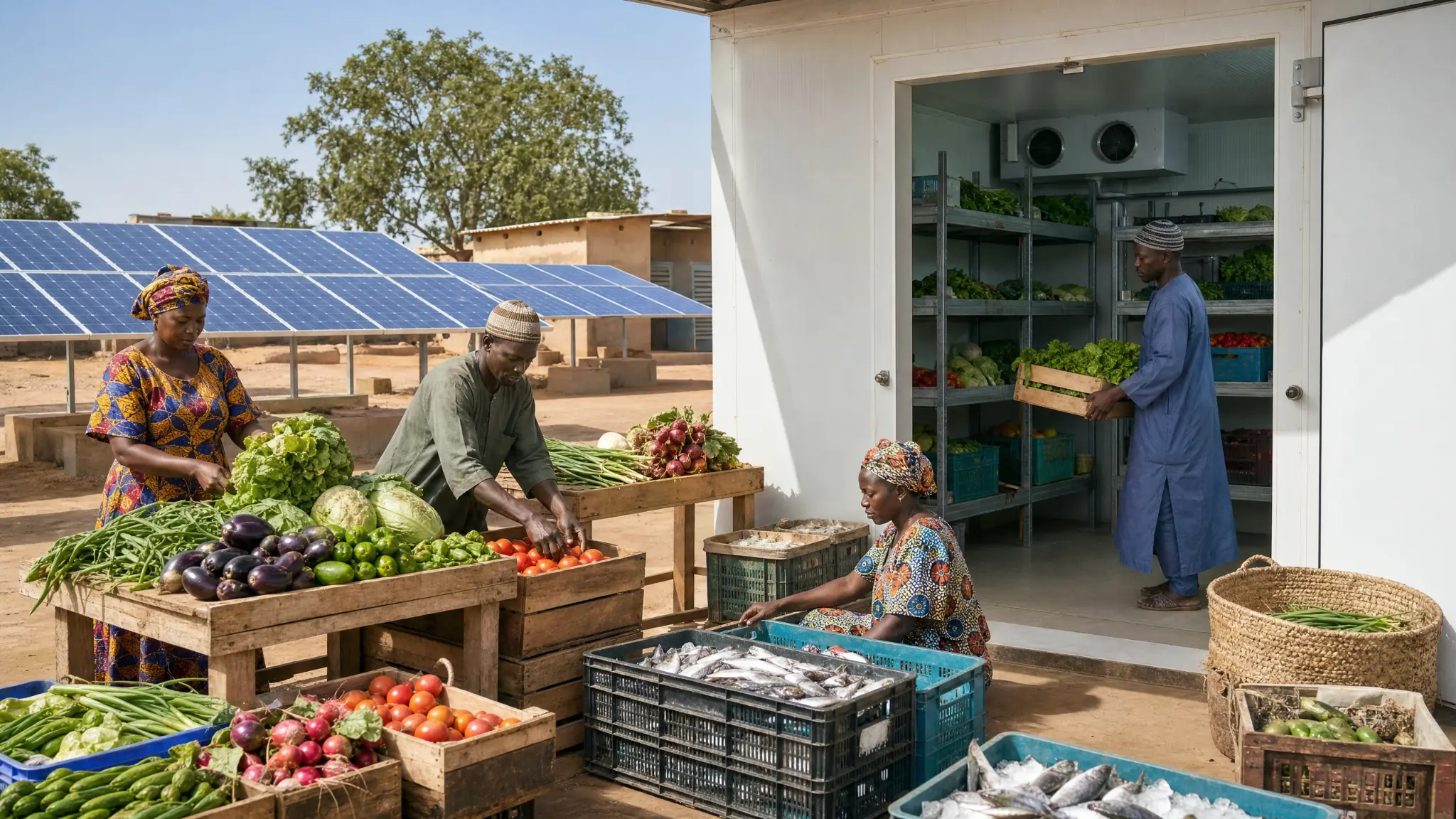
Productive uses, agriculture, local processing and entrepreneurship form impact pathways to be structured with local stakeholders.

View the reference note
Illustrative local agro-processing unit combining solar energy, equipment and productive activity.
conceptual illustration — digitally produced

Institutional trust

Principles designed to support credibility and accountability.

Integrating environmental, social and inclusion dimensions.

The framework provides for attention to women, young people, underserved groups, environmental risks and resilience.

View the reference note
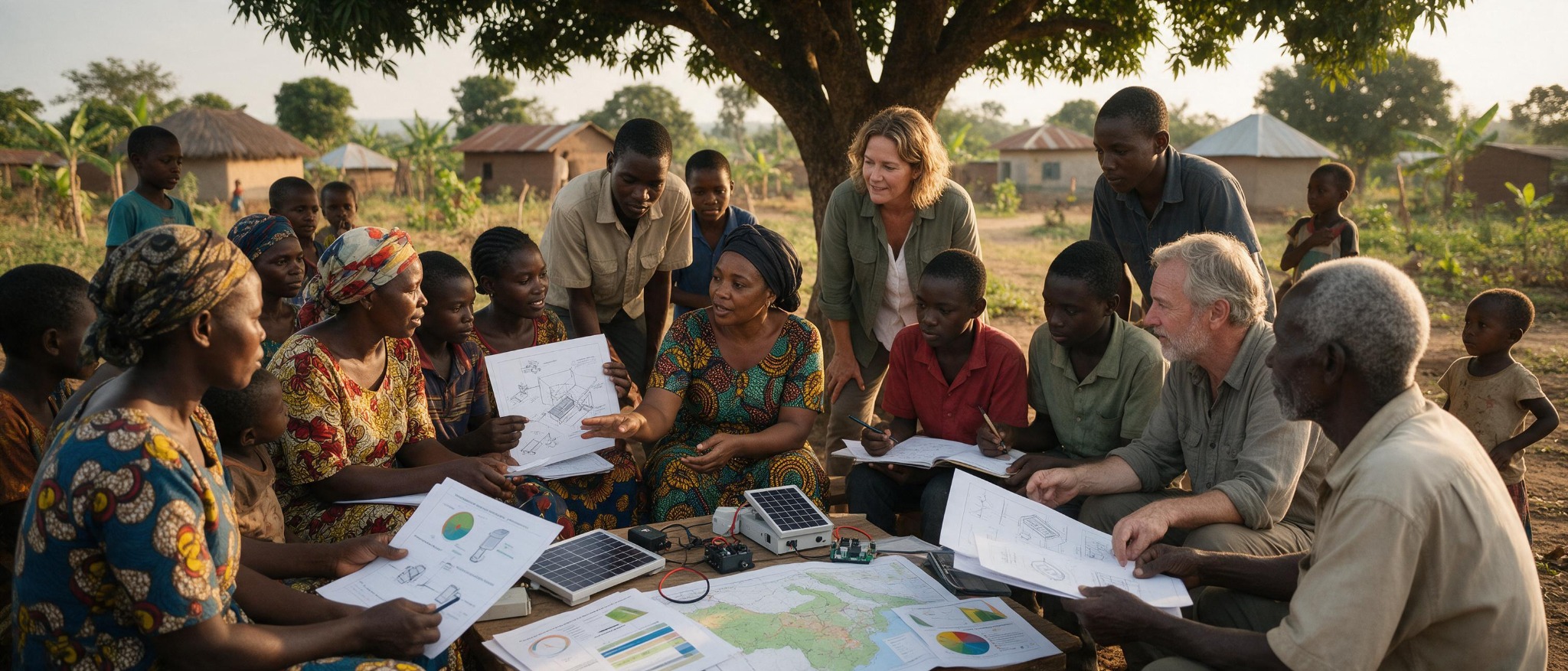
Conceptual community consultation bringing together women, young people, local leaders and partners around solar solutions and planning documents.
conceptual illustration — digitally produced

Clarifying responsibilities, traceability and controls.

The proposed institutional framework relies on documented roles, explicit methods and proportionate verification arrangements.

View the reference note
Structured decision-making meeting connecting documentation, institutional responsibilities and energy infrastructure.
conceptual illustration — digitally produced

Connecting directions with sustainable-development frameworks.
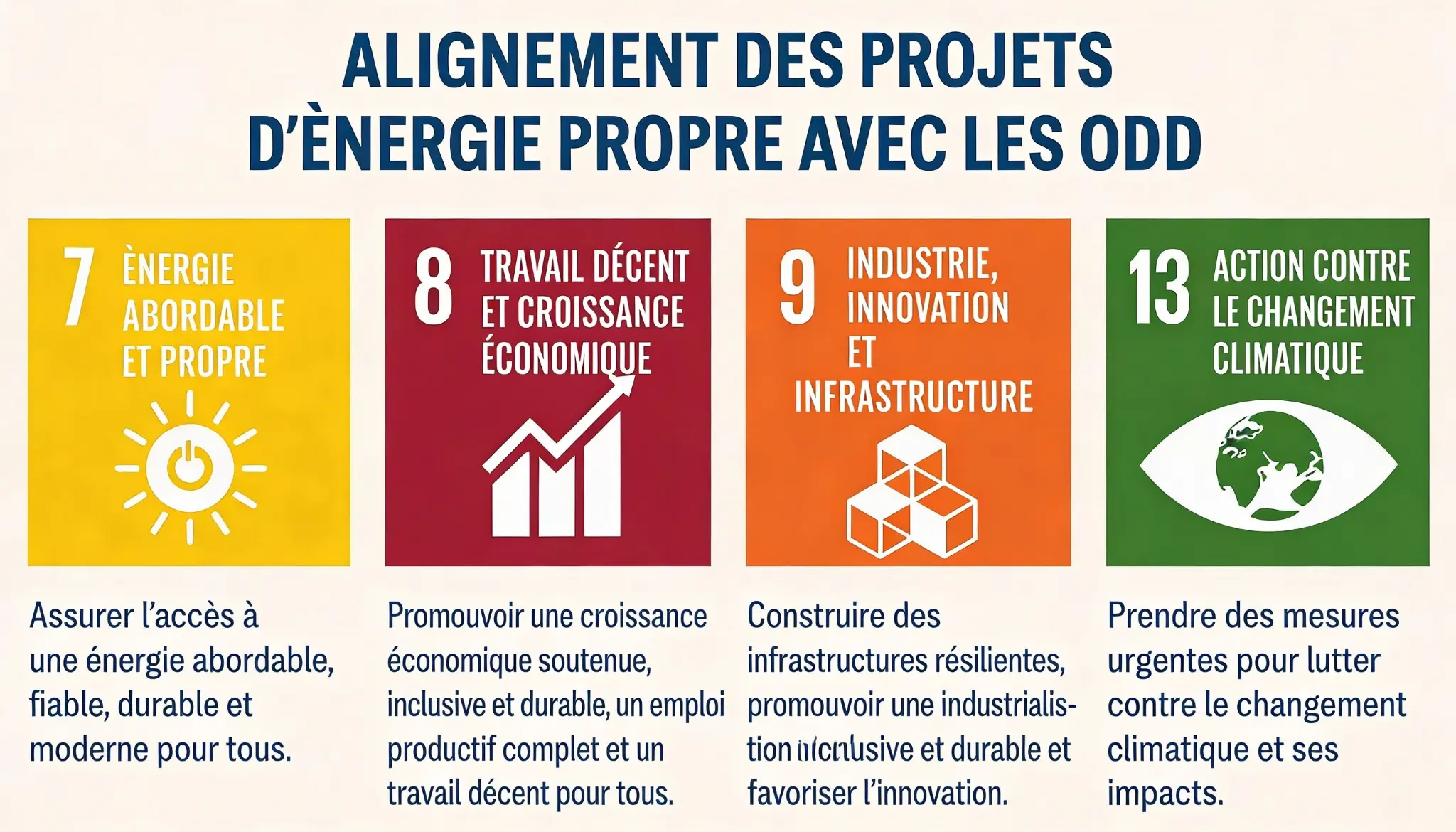
Proposed contributions are situated in relation to SDG 7 and institutional references, with prudent communication on progress and lessons.

View the reference note
Infographic presenting the proposed alignment of clean-energy initiatives with SDGs 7, 8, 9 and 13.
conceptual illustration — digitally produced

Institutional references

Sources informing the framework.

  1. Tracking SDG7 — 2026 reports and datasetstrackingsdg7.esmap.org
  2. World Bank — Access to Electricitydata360.worldbank.org
  3. World Bank — Mission 300www.worldbank.org

References reviewed on 22 November 2026.

Impact framework

Discuss the impact framework

Contact us