Note de référence · Confiance institutionnelleReference note · Institutional trust
Cadre d’alignement avec les ODD et de redevabilité institutionnelleSDG alignment and institutional accountability framework
Relier les orientations de LUMEREVA aux référentiels mondiaux sans sur-attribuer les contributions.Connecting LUMEREVA’s directions with global frameworks without overstating contribution.
Version 1.2Septembre 2026September 2026Document de travail institutionnelInstitutional working document
Objet de la notePurpose of this note
Cette note précise comment les perspectives de LUMEREVA pourront être cartographiées par rapport aux ODD, documentées et communiquées avec prudence.This note explains how LUMEREVA initiatives under consideration may be mapped against the SDGs, documented and communicated prudently.
ODD, indicateurs et redevabilité institutionnelleSDGs, indicators and institutional accountabilityillustration conceptuelle — produite numériquementconceptual illustration — digitally producedCartographie prudente des contributionsPrudent contribution mappingToute contribution publiée doit reposer sur une chaîne de résultats et des preuves.Any published contribution must rest on a results chain and evidence.visualisation conceptuelle — produite numériquementconceptual visualization — digitally produced
01ODD 7SDG 7Ancrage énergétiqueEnergy anchor
02Cibles liéesLinked targetsSanté, eau, travailHealth, water, work
03IndicateursIndicatorsPérimètre et méthodeScope and method
04RedevabilitéAccountabilityPreuves et limitesEvidence and limitations
01
Ancrage dans l’ODD 7SDG 7 anchoring
Tracking SDG7 constitue le dispositif mondial de suivi des progrès relatifs à l’accès à l’énergie, aux renouvelables, à l’efficacité énergétique et à la coopération [1]. Le cadre mondial des indicateurs des Nations Unies définit les indicateurs officiels associés aux ODD [2].Tracking SDG7 is the global framework for monitoring progress on energy access, renewables, energy efficiency and international cooperation [1]. The UN global indicator framework defines the official indicators associated with the SDGs [2].
ODD 7.1 : accès universel à des services énergétiques abordables, fiables et modernes.SDG 7.1: universal access to affordable, reliable and modern energy services.
ODD 7.2 : part des énergies renouvelables.SDG 7.2: renewable-energy share.
ODD 7.3 : efficacité énergétique.SDG 7.3: energy efficiency.
ODD 7.a et 7.b : coopération, technologie et infrastructures.SDG 7.a and 7.b: cooperation, technology and infrastructure.
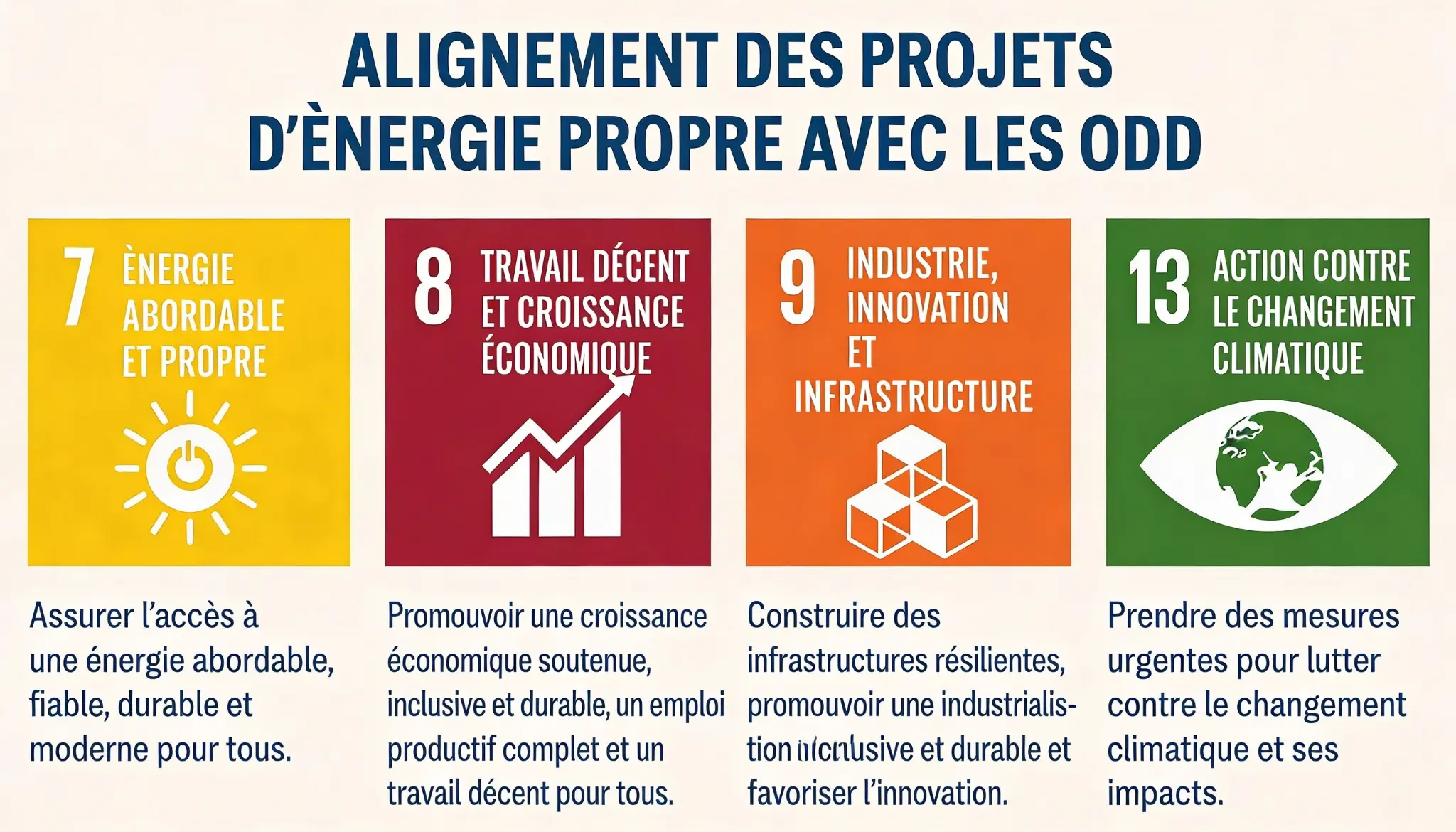
Selon la nature d’une future initiative, des liens secondaires pourront être examinés avec la santé, l’éducation, l’eau, le travail décent, l’industrie, l’égalité de genre, l’action climatique et les partenariats. Ces liens ne seront présentés comme contributions que s’ils sont étayés par une chaîne de résultats et des données.Depending on a future initiative, secondary links may be examined with health, education, water, decent work, industry, gender equality, climate action and partnerships. They will be presented as contributions only when supported by a results chain and evidence.
Distinction entre contribution directe et indirecte.Distinction between direct and indirect contribution.
Identification des effets négatifs possibles.Identification of possible negative effects.
Justification de toute revendication publique.Justification of every public claim.
03
Règles de redevabilitéAccountability rules
La communication distinguera les ambitions, les engagements, les activités, les produits et les résultats vérifiés. Les données externes seront attribuées à leur source et ne seront jamais présentées comme des résultats de LUMEREVA.Communications will distinguish ambitions, commitments, activities, outputs and verified results. External data will be attributed to its source and never presented as LUMEREVA results.
Périmètre et période clairement indiqués.Clearly stated scope and period.
Méthodologie et limites accessibles.Accessible methodology and limitations.
Révision ou correction des informations si nécessaire.Revision or correction when necessary.
Validation interne avant publication.Internal validation before publication.
Vérification indépendante lorsque proportionnée.Independent verification where proportionate.
04
Cycle de publication envisagéProposed publication cycle
Une future publication institutionnelle pourra suivre un cycle annuel ou lié aux étapes de préparation. Le premier cycle devra établir les références et les engagements de méthode avant tout reporting de résultats.Future institutional publication may follow an annual or preparation-stage cycle. The first cycle should establish baselines and methodological commitments before any results reporting.
Cadre initial et définitions.Initial framework and definitions.
Mise à jour des perspectives et risques.Update of initiatives under consideration and risks.
Résultats vérifiés lorsqu’ils deviennent disponibles.Verified results when available.
Enseignements, écarts et actions correctives.Lessons, gaps and corrective action.
Bibliographie et données ouvertes lorsque possible.Bibliography and open data where possible.