Note de référence · Domaines prioritairesReference note · Priority domains
Note sur les usages productifs de l’énergieApproach note on productive uses of energy
Transformer l’accès énergétique en capacités économiques locales.Turning energy access into local economic capability.
Version 1.2Septembre 2026September 2026Document de travail institutionnelInstitutional working document
Objet de la notePurpose of this note
Cette note établit une méthode pour identifier et préparer les usages productifs susceptibles de renforcer l’agriculture, la transformation, la chaîne du froid, les services et l’entrepreneuriat.This note establishes a method for identifying and preparing productive uses that could strengthen agriculture, processing, cold chains, services and enterprise.
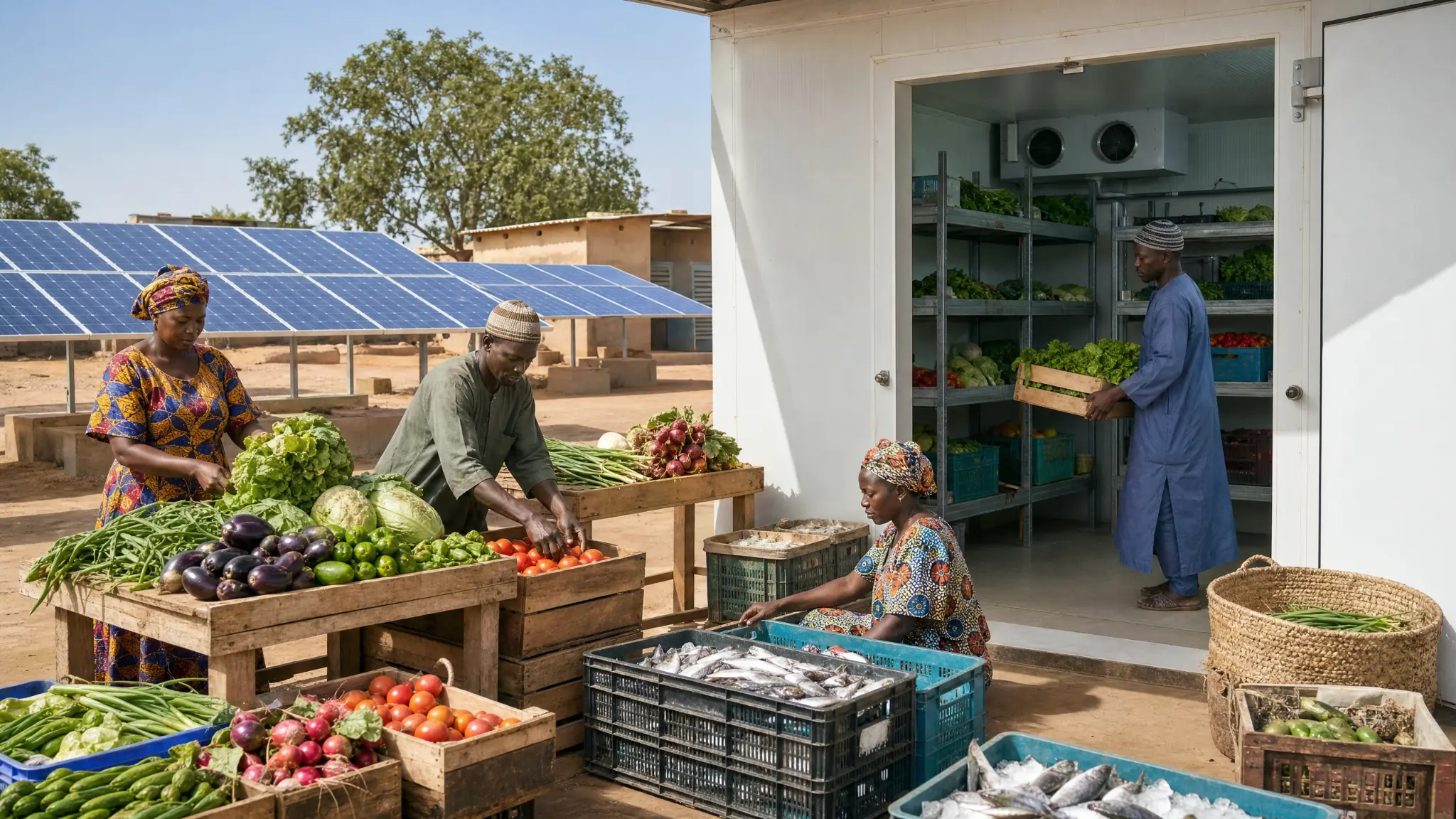
Perspective d’usage productif localLocal productive-use perspectiveillustration conceptuelle — produite numériquementconceptual illustration — digitally producedChaîne de viabilité productiveProductive-viability chainL’équipement n’est pertinent que si l’ensemble de la chaîne est cohérent.Equipment is relevant only when the full chain is coherent.visualisation conceptuelle — produite numériquementconceptual visualization — digitally produced
01MarchéMarketDemande et débouchésDemand and outlets
02ÉnergieEnergyPuissance et fiabilitéPower and reliability
03CapacitésCapabilitiesÉquipement et compétencesEquipment and skills
04ViabilitéViabilityRevenus et maintenanceIncome and maintenance
Usages productifs et transformation localeProductive uses and local processingillustration conceptuelle — produite numériquementconceptual illustration — digitally produced
01
Logique économiqueEconomic logic
La Banque mondiale associe l’accès à l’électricité à l’irrigation, à l’agriculture commerciale, à la transformation, au numérique et aux industries créatrices d’emplois [1].The World Bank connects electricity access with irrigation, commercial agriculture, processing, digital networks and job-creating industries [1].
Pour LUMEREVA, l’usage productif sera étudié comme une chaîne complète : demande, énergie, équipement, compétences, marché, financement et maintenance.For LUMEREVA, productive use will be assessed as a complete chain: demand, energy, equipment, skills, market, finance and maintenance.
Agriculture et irrigation efficientes.Efficient agriculture and irrigation.
Transformation et conservation locales.Local processing and preservation.
Ateliers, services et commerce numérique.Workshops, services and digital commerce.
Entrepreneuriat des femmes et des jeunes.Women’s and youth enterprise.
02
Diagnostic des chaînes de valeurValue-chain diagnosis
La sélection d’un usage potentiel devra reposer sur une analyse de la demande et des débouchés, non sur la seule disponibilité d’un équipement.Selection of a potential use must rest on demand and market analysis, not solely on equipment availability.
Volumes, saisonnalité et pertes actuelles.Volumes, seasonality and current losses.
Clients, prix, concurrence et accès au marché.Customers, prices, competition and market access.
Équipements, puissance et temps d’utilisation.Equipment, power and utilisation time.
Compétences, organisation et accès au financement.Skills, organisation and finance access.
Risques sociaux et environnementaux.Environmental and social risks.
03
Modèles de préparationPreparation models
Plusieurs modèles pourront être comparés : service énergétique, location d’équipement, propriété entrepreneuriale, plateforme partagée ou partenariat avec une coopérative. Le modèle retenu devra clarifier les responsabilités et la viabilité de l’exploitation.Options may include energy-as-a-service, equipment leasing, entrepreneur ownership, shared platforms or cooperative partnerships. The selected model must clarify responsibilities and operating viability.
Coût complet et seuil d’utilisation.Full cost and utilisation threshold.
Maintenance et remplacement.Maintenance and replacement.
Gouvernance de l’actif.Asset governance.
Accessibilité pour les petites entreprises.Affordability for small businesses.
Mesures d’inclusion et prévention de l’exclusion.Inclusion measures and prevention of exclusion.
04
Indicateurs prospectifsProspective indicators
Les cibles seront fixées après la situation de référence et l’analyse de marché.Targets will be set after baseline and market analysis.
Nombre et profil des utilisateurs potentiels.Number and profile of potential users.
Heures d’utilisation et volume traité.Utilisation hours and processed volume.
Réduction des pertes ou du temps de travail.Reduction in loss or labour time.
Évolution des coûts, revenus ou marges lorsque vérifiable.Changes in costs, income or margins where verifiable.
Participation des femmes et des jeunes.Participation by women and young people.