Note de référence · Cadre d’impactReference note · Impact framework
Cadre de vision et orientations d’impactImpact vision and strategic directions
Relier l’accès à une énergie propre aux capacités durables des territoires africains.Connecting clean-energy access with sustainable capabilities across African territories.
Version 1.2Septembre 2026September 2026Document de travail institutionnelInstitutional working document
Objet de la notePurpose of this note
Cette note présente le cadre prospectif dans lequel LUMEREVA entend situer ses futures initiatives, en reliant l’accès à l’énergie, les services essentiels, les usages productifs et la confiance institutionnelle.This note presents the prospective framework within which LUMEREVA intends to position future initiatives, connecting energy access, essential services, productive uses and institutional trust.
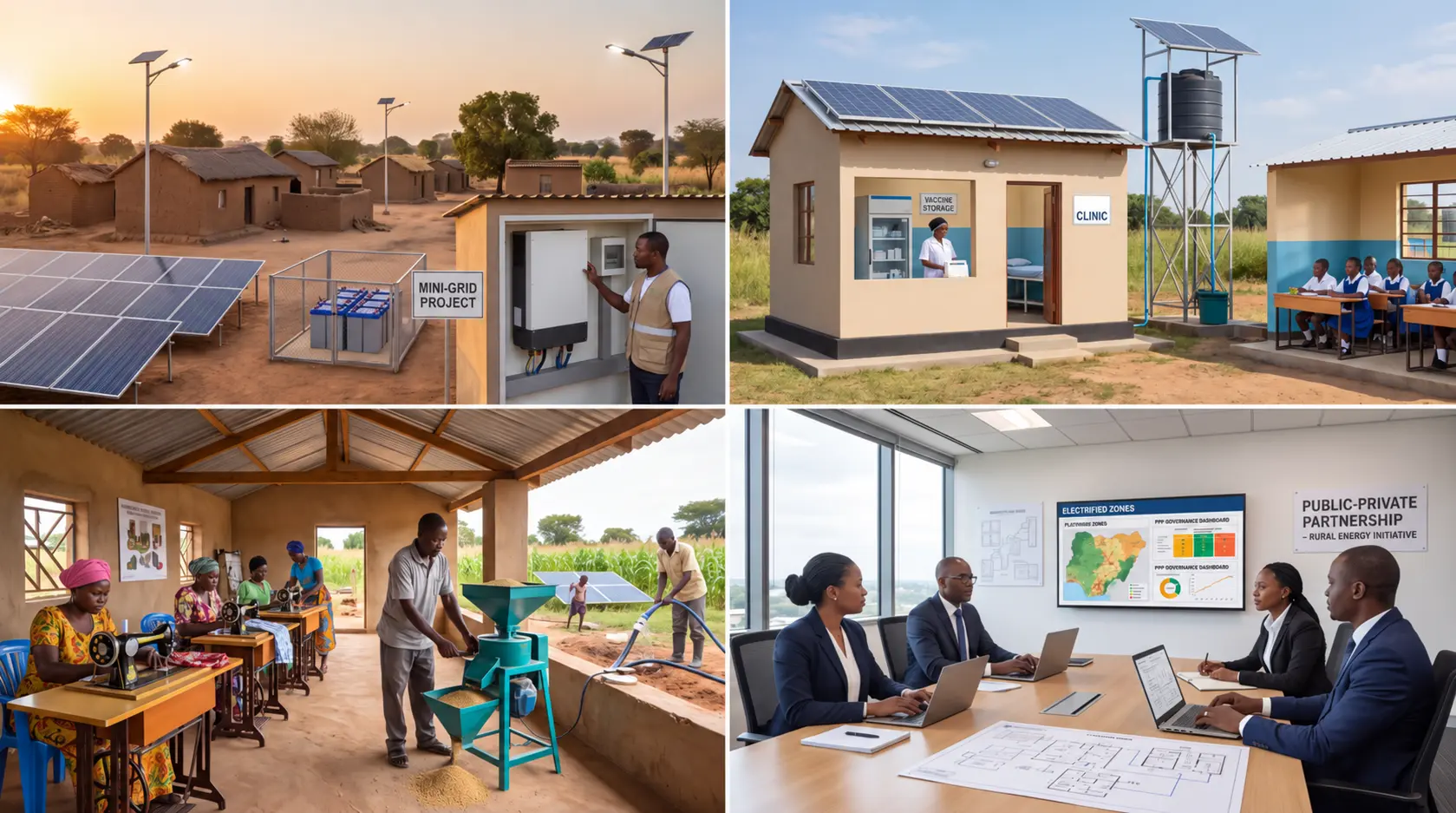
Énergie, services et capacités territorialesEnergy, services and territorial capabilitiesillustration conceptuelle — produite numériquementconceptual illustration — digitally producedArchitecture prospective de l’impactProspective impact architectureLecture institutionnelle simplifiée des relations envisagées.Simplified institutional reading of the proposed relationships.visualisation conceptuelle — produite numériquementconceptual visualization — digitally produced
L’accès à l’électricité constitue l’un des indicateurs centraux de l’ODD 7. Tracking SDG7 en documente l’évolution par pays, en distinguant notamment les contextes urbains et ruraux [1].Electricity access is a central SDG 7 indicator. Tracking SDG7 documents its evolution by country and distinguishes, among other dimensions, urban and rural contexts [1].
Dans ce contexte, la vision de LUMEREVA privilégie les énergies renouvelables, en particulier le solaire, comme infrastructure habilitante plutôt que comme une fin isolée.Within this context, LUMEREVA’s vision positions renewable energy—particularly solar—as an enabling infrastructure rather than an isolated end.
Améliorer la disponibilité et la qualité du service énergétique.Improve energy-service availability and quality.
Relier l’énergie aux fonctions sociales et économiques prioritaires.Connect energy with priority social and economic functions.
Préparer des modèles adaptés aux capacités techniques et institutionnelles locales.Prepare models adapted to local technical and institutional capacities.
02
Principes directeursGuiding principles
La vision repose sur l’additionnalité, la pertinence territoriale, l’inclusion et la capacité de vérifier les changements recherchés. Mission 300 illustre l’importance d’articuler l’accès à l’électricité aux services, à l’agriculture, au numérique et à l’emploi [2].The vision is grounded in additionality, territorial relevance, inclusion and the ability to verify intended change. Mission 300 illustrates the importance of linking electricity access with services, agriculture, digital development and employment [2].
Priorité aux besoins documentés plutôt qu’aux solutions prédéterminées.Documented needs before predetermined solutions.
Conception proportionnée à la demande, aux risques et aux capacités d’exploitation.Design proportionate to demand, risks and operating capacity.
Concertation avec les autorités, communautés, partenaires techniques et financiers.Consultation with authorities, communities and technical and financial partners.
Progression par étapes assortie de critères de décision explicites.Stage-gated progression with explicit decision criteria.
La chaîne d’impact proposée relie les ressources mobilisées, les activités de préparation, les services énergétiques attendus, leurs usages et les transformations de plus long terme. Chaque perspective devra disposer d’une situation de référence et d’hypothèses vérifiables avant toute cible.The proposed chain connects mobilised resources, preparation activities, intended energy services, their uses and longer-term transformations. Each initiative under consideration will require a baseline and verifiable assumptions before targets are set.
Accès : disponibilité, continuité, qualité et accessibilité.Access: availability, continuity, quality and affordability.
Services essentiels : santé, éducation, eau et chaîne du froid.Essential services: health, education, water and cold chain.
Économie productive : agriculture, transformation, entrepreneuriat et emploi.Productive uses and local development: agriculture, processing, enterprise and employment.
Confiance : ESG, gouvernance, transparence et redevabilité.Trust: ESG, governance, transparency and accountability.
04
Critères de passage à la conceptionCriteria for moving into design
Une perspective ne devrait progresser vers la conception détaillée que si le besoin, la demande, l’ancrage institutionnel, les risques et les modalités d’exploitation sont suffisamment documentés.An initiative under consideration should progress to detailed design only when need, demand, institutional anchoring, risks and operating arrangements are sufficiently documented.