Note de référence · Domaines prioritairesReference note · Priority domains
Cadre énergie–santé–éducation–eau–chaîne du froidEnergy–health–education–water–cold-chain framework
Partir des fonctions essentielles à sécuriser, puis dimensionner l’énergie nécessaire.Starting with essential functions, then sizing the energy needed to sustain them.
Version 1.322 novembre 202622 November 2026Document de travail institutionnelInstitutional working document
Objet de la notePurpose of this note
Cette note encadre l’analyse des besoins énergétiques associés aux établissements de santé, aux écoles, à l’eau, au numérique et à la chaîne du froid.This note frames the analysis of energy needs associated with health facilities, schools, water, digital access and cold chains.
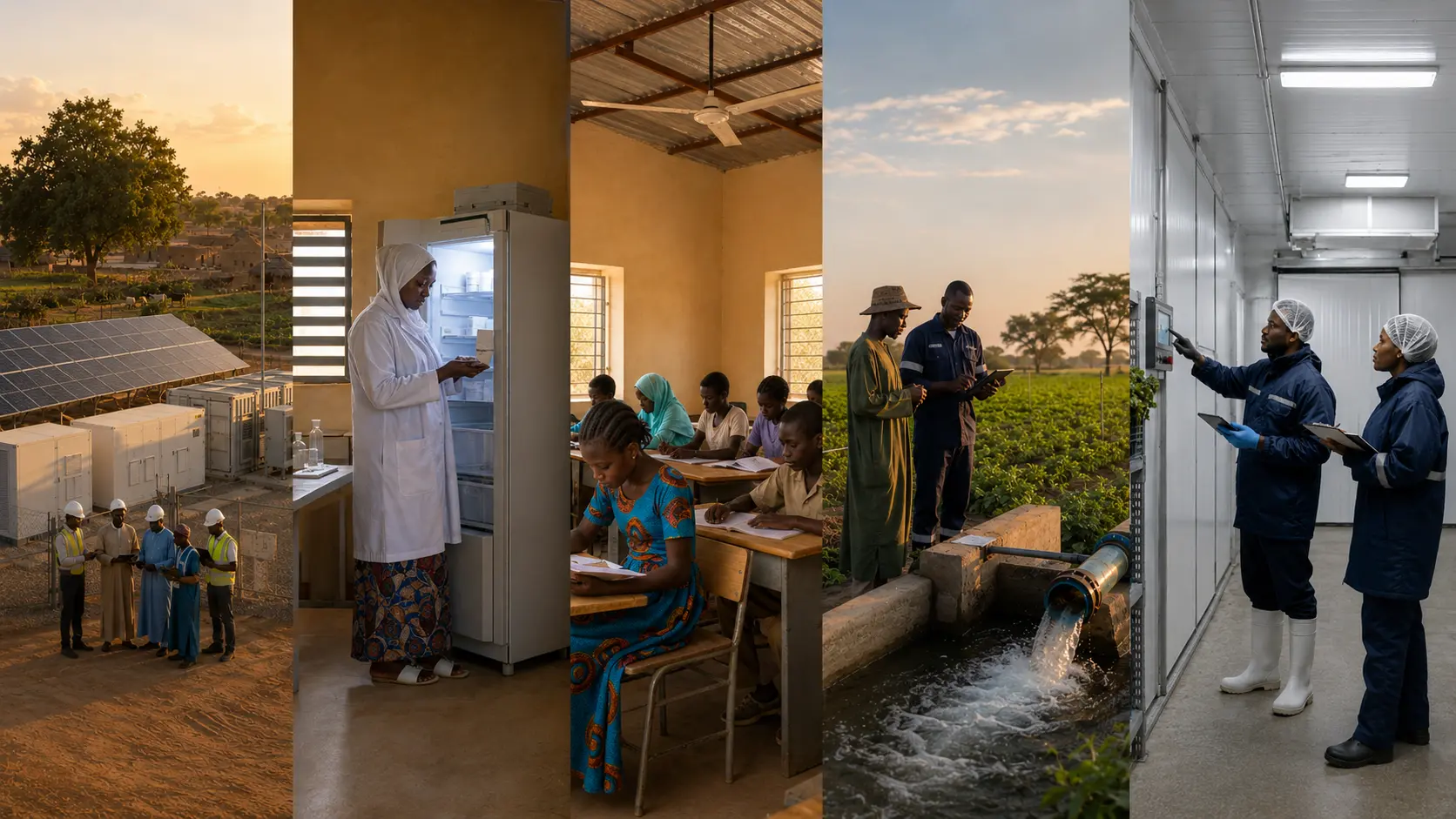
Cadre intégré énergie–santé–éducation–eau–chaîne du froidIntegrated energy–health–education–water–cold-chain frameworkillustration conceptuelle — produite numériquementconceptual illustration — digitally producedApproche fondée sur les fonctionsFunction-led approachL’énergie est dimensionnée à partir du service à sécuriser.Energy is sized from the service function that needs to be secured.visualisation conceptuelle — produite numériquementconceptual visualization — digitally produced
01FonctionFunctionSoins, apprentissage, eauCare, learning, water
02CriticitéCriticalityCharges et continuitéLoads and continuity
03SolutionÉnergie et équipementsEnergy and equipment
04ProtocoleProtocolMaintenance et réponseMaintenance and response
01
JustificationRationale
Dans sa fiche actualisée le 15 octobre 2026, l’OMS estime qu’environ un milliard de personnes dans les pays à revenu faible ou intermédiaire inférieur sont desservies par des établissements de santé sans électricité fiable ou sans électricité [1]. En Afrique subsaharienne, environ 15 % des établissements n’ont aucun accès à l’électricité et seule la moitié des hôpitaux déclare un accès fiable. Ces constats reposent sur les enquêtes nationales disponibles entre 2015 et 2022 dans 27 pays à revenu faible ou intermédiaire inférieur [1].In its fact sheet updated on 15 October 2026, WHO estimates that about one billion people in low- and lower-middle-income countries are served by health facilities with unreliable electricity or no electricity [1]. In Sub-Saharan Africa, about 15% of facilities have no electricity access and only half of hospitals report reliable access. These findings draw on national surveys available between 2015 and 2022 across 27 low- and lower-middle-income countries [1].
Mission 300 relie également l’accès à l’énergie aux cliniques, écoles et institutions publiques [2].Mission 300 also links energy access with clinics, schools and public institutions [2].
Continuité des soins et conservation.Continuity of care and preservation.
Éclairage, numérique et conditions d’apprentissage.Lighting, digital access and learning conditions.
Pompage, traitement et distribution d’eau.Water pumping, treatment and distribution.
Réfrigération des médicaments et produits essentiels.Refrigeration of medicines and essential products.
02
Approche fondée sur le serviceService-led approach
Le dimensionnement énergétique devra commencer par les fonctions à maintenir, leurs plages horaires, leur criticité et leurs équipements. Cette approche limite le risque de surdimensionnement ou d’une infrastructure déconnectée des usages.Energy sizing should begin with the functions to be maintained, their operating schedules, criticality and equipment. This reduces the risk of oversized infrastructure or infrastructure disconnected from use.
Inventaire fonctionnel et audit des équipements.Functional inventory and equipment audit.
Classification des charges critiques, prioritaires et différables.Classification of critical, priority and flexible loads.
Exigences de continuité et d’autonomie.Continuity and autonomy requirements.
Plan de maintenance et responsabilités.Maintenance plan and responsibilities.
03
Préparation intégréeIntegrated preparation
Les besoins énergétiques seront examinés avec la disponibilité de l’eau, les télécommunications, la sécurité, les compétences et les consommables. Les solutions devront respecter les normes sectorielles nationales applicables.Energy needs will be considered alongside water, communications, security, skills and consumables. Solutions must comply with applicable national sector standards.
Consultation des professionnels et usagers.Consultation with professionals and users.
Compatibilité des équipements médicaux et pédagogiques.Compatibility of medical and educational equipment.
Protection électrique et sécurité.Electrical protection and safety.
Formation des opérateurs et protocole de continuité.Operator training and continuity protocol.
04
Résultats et indicateurs envisagésProposed outcomes and indicators
Les résultats devront être formulés en termes de fonctions rendues possibles, et pas seulement de capacité installée.Outcomes should be formulated in terms of enabled functions, not only installed capacity.
Disponibilité des équipements essentiels.Availability of essential equipment.
Heures de continuité des fonctions critiques.Continuity hours for critical functions.
Incidents et délais de rétablissement.Incidents and restoration times.
Volumes d’eau ou capacités de conservation lorsque pertinents.Water volumes or preservation capacity where relevant.
Satisfaction des professionnels et usagers.Professional and user satisfaction.